TL;DR

Turn quiet afternoons into listening time
- Thousands of audiobooks, podcasts and originals
- Listen on your phone, tablet or Echo — also offline
- Cancel anytime
A Sixty and Me report describes functional fitness exercises designed to help women over 60 practice movements used in daily life, including standing from a chair, reaching and balancing. It recommends starting gradually and consulting a health professional when health conditions, pain, dizziness or mobility limitations raise concerns.
Sixty and Me has published a beginner’s guide to functional fitness for women over 60, describing five low-equipment exercises that rehearse everyday movements such as rising from a chair, stepping sideways and maintaining balance. The guide says readers can begin with short sessions at home, while recommending professional advice for people with health conditions, pain, dizziness or other concerns.
The report defines functional fitness as building strength and ability for activities in daily life. Examples include lifting groceries, reaching for an item on a shelf, pushing an object and squatting to pick something up. Its focus is not a specific fitness result, but practicing movement patterns that people use outside a workout.
The five exercises are sit-to-stands, wall push-ups, supported heel raises, supported side steps and supported balance practice. The first two are presented as ways to work the lower body and upper body respectively. For balance activities, the report advises standing beside a counter or chair that can be used for support.
For sit-to-stands, the guide suggests sitting near the front of a chair, leaning forward slightly and using the legs to stand before lowering back down. Wall push-ups involve bending the elbows to bring the body toward a wall and pushing back. The guide gives a starting range of five to 12 repetitions for these and the heel raises; it does not give a repetition target for side steps or balance practice.
Practicing Movements Used at Home
The exercises are framed around movements that may be needed repeatedly in ordinary routines, rather than isolated gym tasks. Practicing a controlled stand, step or reach may be relevant to people who find such activities more effortful, though the source does not promise that the routine will restore a particular ability or prevent injury.
The report cites a 2025 meta-analysis as finding that functional task training improved balance, mobility and walking ability among adults aged 60 and older. It also refers to a review of studies linking combined balance and functional training with fall prevention and improved physical well-being in older adults. Those findings concern groups and training approaches described in the cited research; they do not establish an individual outcome from these five exercises.
For readers seeking a manageable entry point, the guide proposes 10 to 15 minutes on two or three days in a week, with duration or repetitions increased as exercises become easier. The advice gives readers a starting structure while leaving room to adapt activity to personal ability and health needs.
Products Worth Considering

Oral-B iO5 Rechargeable Electric Toothbrush with 5 Cleaning Modes and Travel Case, White

Garmin Forerunner 165 GPS Running Smartwatch, 43 mm, Black

Fitbit Sense 2 Health and Fitness Smartwatch, Shadow Grey/Graphite
As an affiliate, we earn on qualifying purchases.
Public Guidance on Activity After 60
The source report connects its suggestions to public-health recommendations. It says the U.S. Centers for Disease Control and Prevention advises adults aged 65 and older to do muscle-strengthening activities at least twice weekly, alongside activity that supports cardiovascular and pulmonary health and balance. It also cites the World Health Organization as recommending muscle-strengthening activity on two days a week for adults 65 and older.
According to the report, WHO guidance suggests balance and fall-prevention activities on three or more days a week for adults with mobility difficulties, with activity increased gradually as needed. These are general recommendations cited by Sixty and Me, not a personalized exercise prescription. The report’s practical examples include walking, using stairs when appropriate and practicing balance beside a sturdy surface.
The guide also suggests making activity part of existing routines, such as carrying groceries with attention to posture. It presents these ideas as ways to incorporate movement into the day, rather than as substitutes for a tailored exercise plan or clinical care.
Individual Results and Safety Needs
The supplied report does not provide the full citation or methods for the 2025 meta-analysis and study review it references, so their sample sizes, training details and effect measures cannot be assessed from this material alone. It also does not report a clinical trial testing the five listed exercises as a single program.
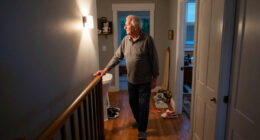
There is no information about how frequently readers experience difficulty with daily tasks, what level of supervision is appropriate for each person, or how much improvement an individual might expect. The guide acknowledges that needs differ: it advises people with health-related limitations, pain or dizziness, or concerns about exercise, to speak with a health professional. It says to stop an activity if something feels wrong.
Starting With a Gradual Routine
The guide’s immediate suggestion is to choose a realistic plan and try 10 to 15 minutes of functional exercises on two or three days during the week. Readers are encouraged to use a chair, counter or wall for support where needed and to add time, repetitions or a resistance band only as the movements feel easier.
No follow-up study, program launch or additional reporting date is announced in the supplied material. The practical next step for readers is to adapt the exercises to their own abilities and seek qualified guidance when health concerns or symptoms could affect safe participation.
Key Questions
What does functional fitness mean in the guide?
It means practicing strength and movement for everyday activities, such as getting up from a chair, stepping sideways, reaching or carrying items.
Which exercises does the report describe?
The five examples are sit-to-stands, wall push-ups, supported heel raises, supported side steps and supported balance practice. Several use a chair, counter or wall for support.
How often does the guide suggest beginning?
It suggests starting with 10 to 15 minutes on two or three days in a week, then increasing activity gradually as the exercises become easier. This is general guidance, not an individualized prescription.
When should someone ask a health professional before exercising?
The report advises seeking professional guidance if a person has health-related limitations, pain, dizziness or other concerns. It also recommends stopping an activity if something does not feel right.
Source: rss